|
Office Machines
posted: August 17, 2009
I got a call from David Bamundo at The Wall Street Journal. He needed an illustration for an article about Thomas Pynchon’s new book, “Inherent Vice.”
The deadline was short, and there wasn’t much text to refer to. I was asked to do the assignment because I am known in some circles as a “Noir” illustrator.
David wanted a portrait of Pynchon. But the portrait had to be somewhat obscure.
Evidently, the media has not seen Pynchon in a very long time. This fact added to the mystique and allure of the author and his new book.
I decided to focus my pictorial sights on mirrors and reflections. Mirrors are often used as a psychological force in the narrative design of Film Noir imagery. This was my way into the assignment since I didn’t have the story.
As an illustrator who works on very short deadlines, I am often forced to photograph myself for reference. In other words, I am my own model. I donned one of my many fedoras, a Sam Spade trench coat, and a.45 caliber, U.S. army issue, Hell-fire handgun. I also tried using a cigar. I set 2 large mirrors next to me, one on either side. I set my Omni light low to the ground and behind me, and I shined it upwards. I shined it over my shoulder and across my face. I was hoping for rim light. Rim light is to Noir what heavenly light is to Giambattista Tiepolo. I set my camera on a tripod, well below eve-level. The eyes of the devil, or the dying, were upon me.
Mirrors. I think, create ambiguity and distortion. And you don’t need a mirror to know what the mind creates. Eh? In this picture, the mirror might be a doorway, and the reflection of the main subject might be a dead guy. Or not.
As for the story, well, I guess I blew that. No palm trees, or California surf culture represented here. But hell! If Raymond Chandler in Los Angeles, and Dashiell Hammett in San Francisco can skip that stuff, so can I.
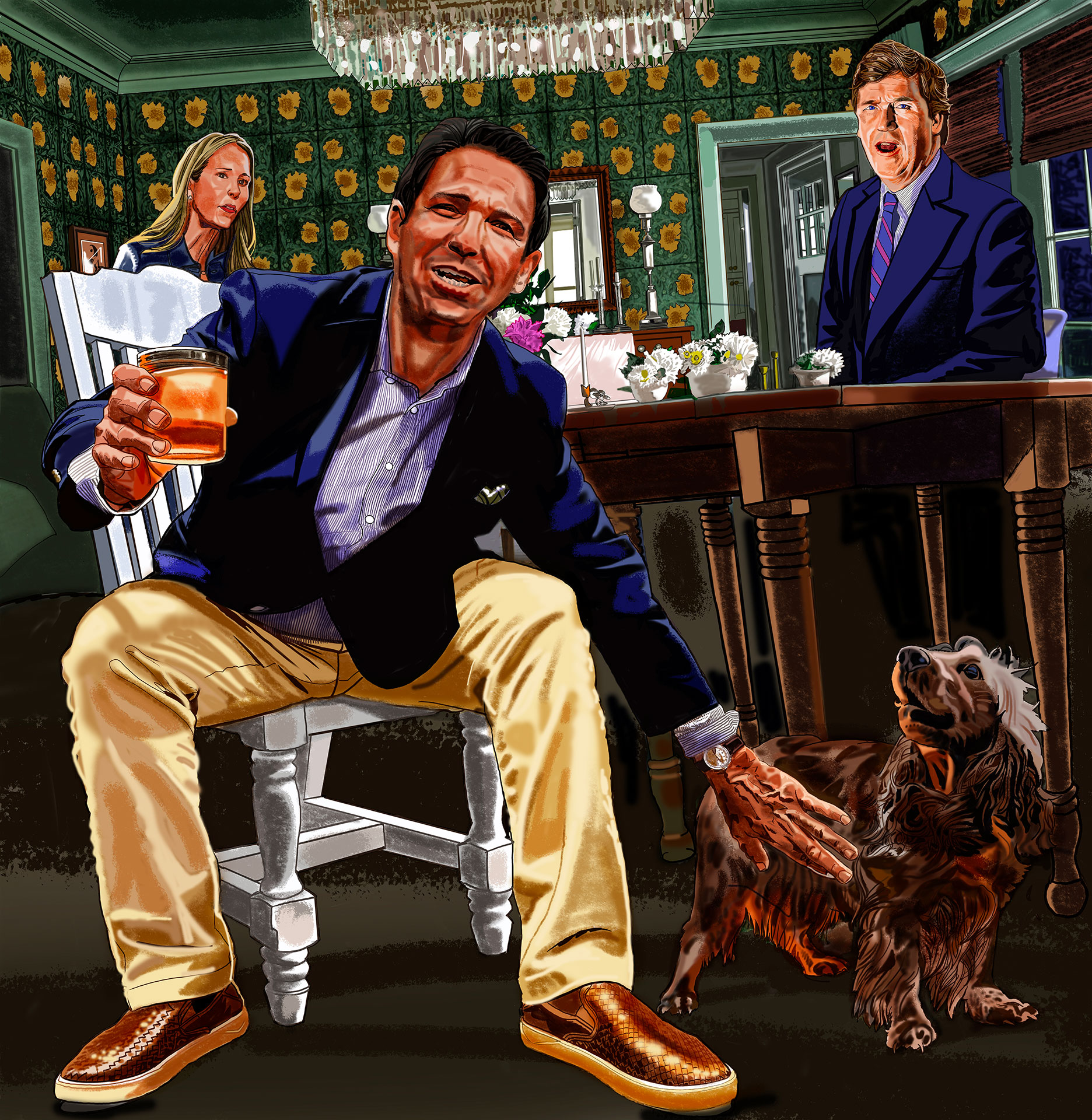
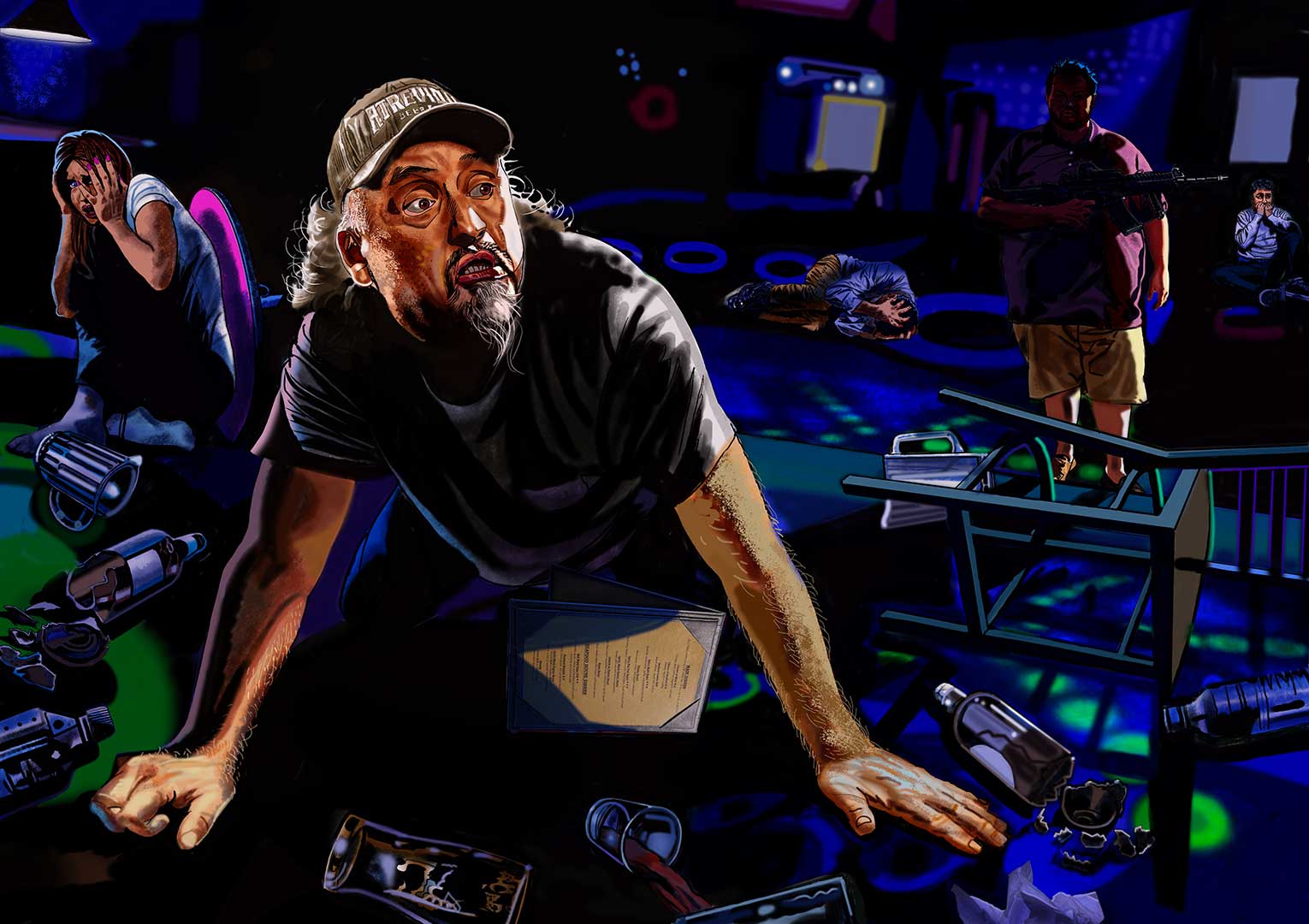
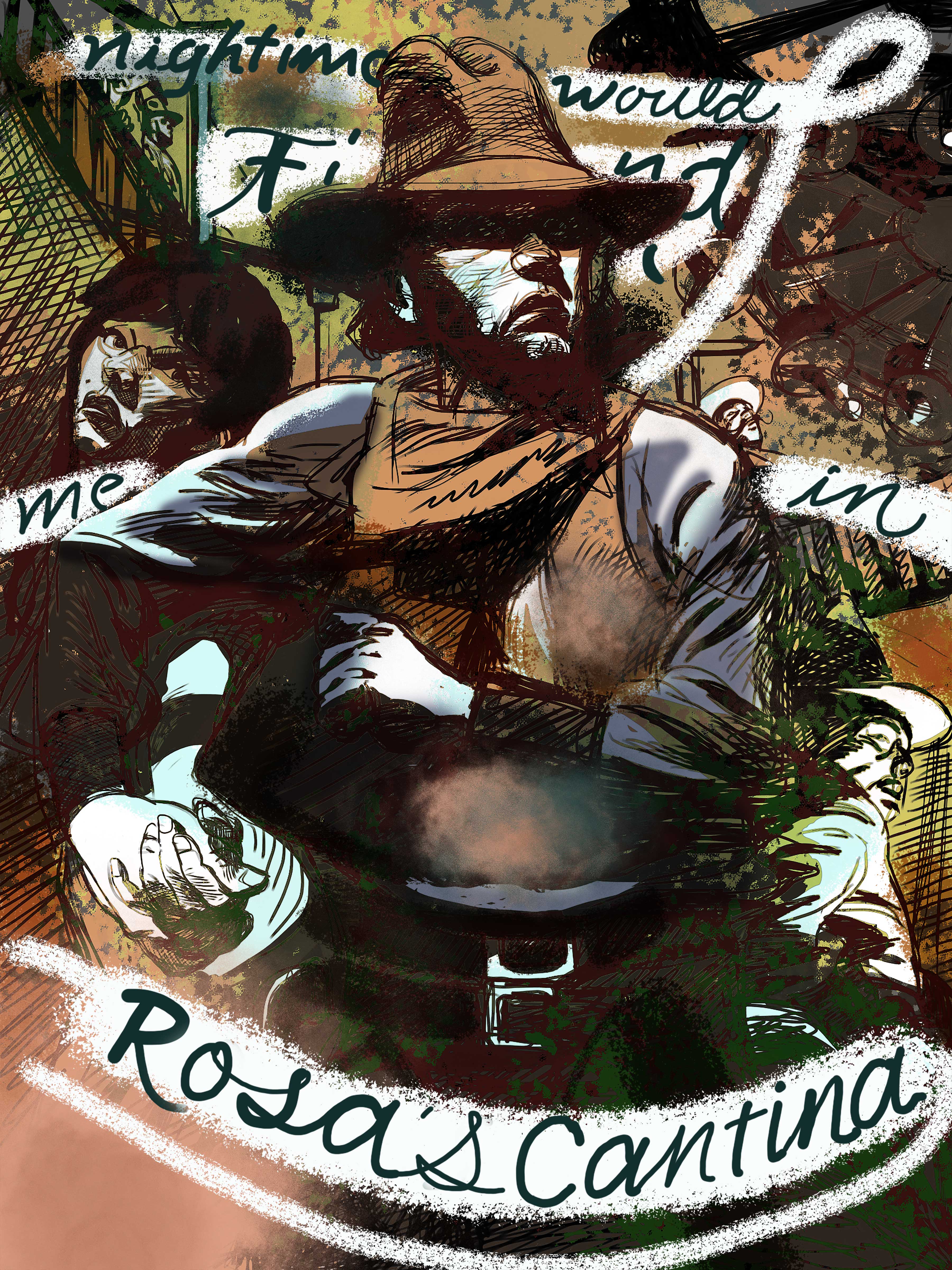
I decided to add several illustrations to this blog that seemed connected in some way. The subjects are mostly sitting, the viewer is engaged, and pictures are dark, all artificially lit. Everyone is trapped, aberration everywhere and so seemingly, all is perfectly Noir. And in the air there is the tap, tap, tapping of keys.
Illustration for the New York Times, Week in Review, secretly, a portrait based on Stephen King
Fiction illustration For Playboy Magazine
One of 22 illustrations for The New York Times Magazine, The Funny Pages, a story by Elmore Leonard titled, Comfort to the enemy, inspired by Fred MacMurray's, Walter Neff in Billy Wilder's, Double Indemnity.
For Time magazine, a story about True Crime Writers; secretly, a portrait of a young Truman Capote.
Cover illustration for The New York Times, Week in Review; a story about Cyber War. 31 comments |
permalink
Plaza De Toros Monumental
posted: July 27, 2009
Plaza De Toros Monumental De Las Ventas Madrid, Vamanos!
Plaza De Toros felt a little strange. The idea of attending a bullfight was daunting. After all, I am not accustomed to watching a man singlehandedly confront and kill a massive bull. The idea of nakedly confronting an animal that fierce is beyond me. I am not that courageous or that cruel. I pretended I was watching a dance. A decadent dance. Years ago, as an art student, I painted a portrait of the great Manolete. I also executed several charcoal drawings of bullfighters. These drawings represented a crossroads in the evolution of a personal style. But the selection of the subject matter also revealed a cultural influence that was genuine. My father was of Spanish, and Mexican descent. He grew up in Taos County, New Mexico, in a little mountain town called Penasco. He was, by all accounts, a hell-raiser, and rode freight trains to Colorado and Utah in his youth. His favorite sports were boxing and bullfighting, and he loved to fire his .45 caliber revolver. My mother was of Italian, and Mexican descent. She was a lover of animals. Had they found themselves at Las Ventas, she would have stayed outside and prayed for the bull while my old man would have venerated the Matador while he sent the bull straight to hell. They listened to a lot of Mariachi music when I was young, and there was a strong Latin underbelly beneath our overtly American skin. The bullfights, six in all, went according to the same sequence of actions. The bull is released into the ring, and there he is distracted and exhausted by several assistant Matadors with capes. They yell, “hey, hey, toro” as they wave their capes in front of the bull and then duck behind a wooden wall that the bull cannot penetrate. This causes the bull to run around the ring. Pretty soon after that, the Picadors, two of them, ride out on their horses. And they are impressive! The horse is powerfully built, and his eyes are wrapped with a cloth covering that allows no eyesight. He is completely protected with pads under his belly, and around his neck and legs. The Picador himself has his feet is metal stirrups, and it looks as if he is protected from the waist down. He carries a long pole with a pointed end. The men with the capes artfully maneuver the bull to the Picador. Then the bull charges the Picador, lifting the horse off the ground. The Picador stabs the bull two or three times, causing the animal to bleed from his hump. Two sets of decorated darts, or Banderillas, are then stuck into the bull. The Matadors work as a team and they are extremely professional. The head Matador stands aside during the preliminary stages (Tercio) of the fight, observing the bull carefully as the assistants, the Picadors, and the Banderilleros do their work. It is here that the Head Matador goes to work, displaying tremendous skill and courage. Through a series of passes (Faena) he exhausts, confuses, and dominates the bull while trying his best to entertain the boisterous crowd. Finally, the Matador administers the kill (Estocada) with his sword. All of this seems to give the Matador extreme advantage over the bull, but I wouldn’t say it too loudly if you happen to be rooting for the Toro. During one of the fights, it took the Matador three tries to get the sword into the bulls hump. The sword bounced harmlessly out of the animals back, much to the Matadors embarrassment. On the last fight, the Matador damn near bought the farm. The bull caught his right side, and the young Matador was flung high into the air, and then onto the ground underneath the head and horns of the massive animal. The Matador instinctively covered his head and curled his body into a fetal position as his assistants rushed the animal, furiously waving their capes and yelling to distract the bull. Afterwards, the Matador dusted himself off and executed a series of passes while he courageously dominated the animal. And when he killed the bull, he seemed to take particular pleasure in doing it. He drove his sword flawlessly into it’s massive back for the “Suerte de Matar.” Then he taunted the bull, as it stood motionless, dying. Usually, after the matador drives the sword into the bulls hump, the bull will want to fight for a short period of time. Death is not instantaneous. Then the bull suddenly weakens, standing still, paralyzed, while the assistant bullfighters stand on either side of him, waving their capes in a manner that causes the bull to move his head from side to side. The bull collapses onto his front legs and rolls or pitches onto the ground in seconds. This particular bull, unlike any before him on this night, rose up in the face of the Matador after falling to his knees from the fatal wound. He was the only bull that did this. It surprised everyone. It was as if he was saying, “Fuck you!’ to the Matador. ‘Your nothing little miss matador!! You bastard!’ ‘You and your fucking suit of lights.” The crowd let out a collective “ooooohhhh!” when this happened. The Matador seemed a bit undone, and had to come back and taunt the dying animal for a second time. Finally, the bull collapsed and an assistant administered the fatal blow with his dagger. That was one hell of a bull!
Confrontation
posted: July 13, 2009
Serendipity
posted: May 8, 2009
Serendipity…
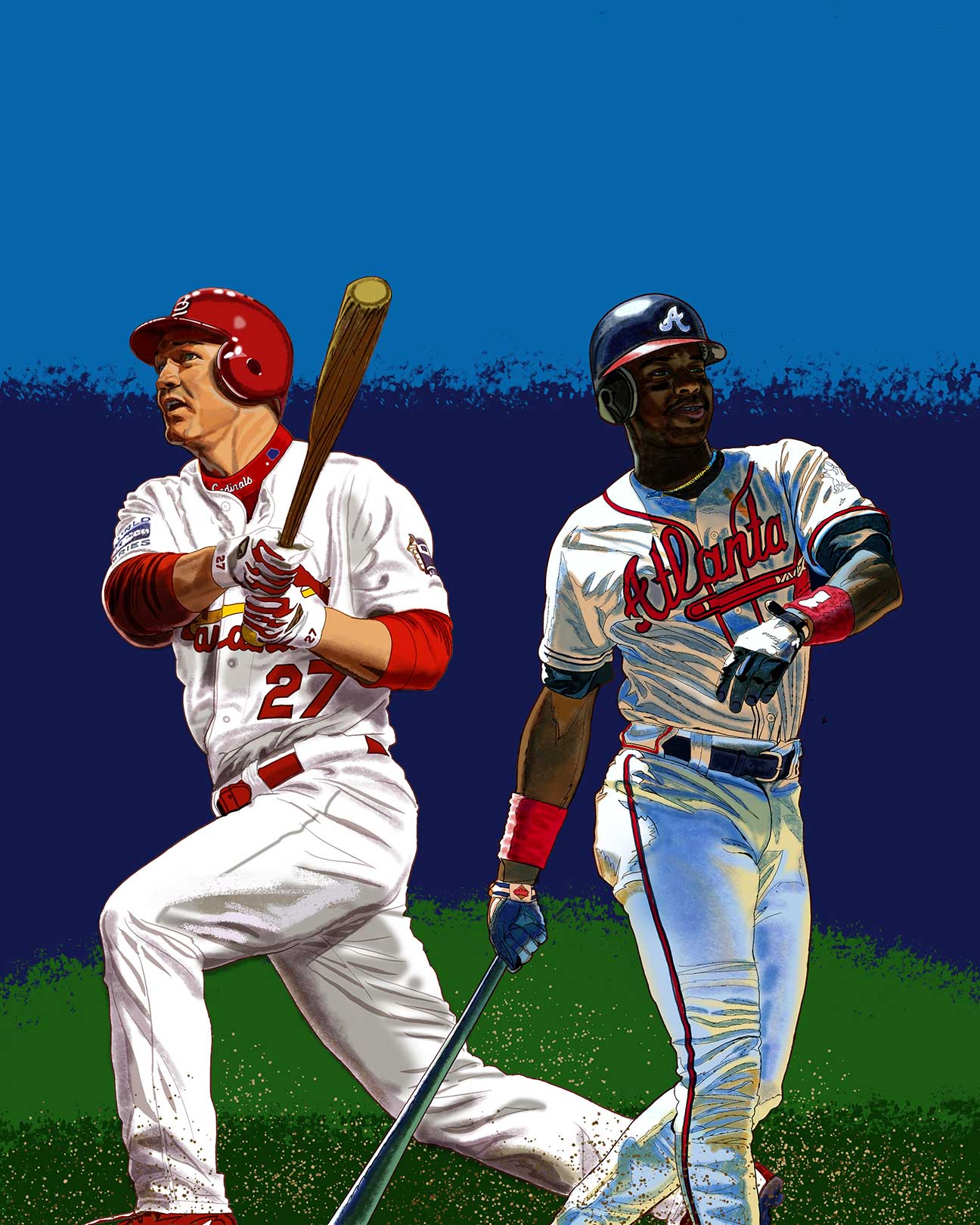
Time magazine called on 4.7.09 with an assignment to do 10 small portraits for the Time 100 issue.nbsp Fortune magazine called on 4.8.09 to do approximately 7 illustrations for a story about the rise and fall of Bernie Madoff.nbsp Later that week, another portrait for Time came in.nbsp All 18 pieces were due on 4.24.09.nbsp That meant 18 illustrations in 15 days!nbsp For some illustrators, that is not such a big deal.nbsp For me, this was a definite challenge and a reason to be very nervous.
The Time portraits were simple and straightforward.nbsp Do a portrait of the subject and don’t worry about concept, or even a background!nbsp The Fortune illustrations were a bit more challenging because the assignment required that the same character be depicted in several illustrations, and that the environments be credible, and that several characters be represented in a narrative kind of way.
The fees for both assignments were handsome.nbsp In this economy, the combination of both assignments represented a fair amount of money and even a chance to relax for 15 minutes after the work was done.
Throughout my career, I’ve done similar assignments for clients such as Sports Illustrated, Wig Wag, The New York Times Magazine, New York Magazine, and G.Q., as well as other clients.nbsp One would think I would have the experience and confidence to move through this work without any undue sense of fear and anxiety.
Wrong!nbsp
Well, I got it done and here it is. nbspAll I can say is that being an illustrator is like shaving without a mirror.nbsp If you can’t “feel” it, you’re going to bleed.
|
Recent Articles
Topics
Archive
www.jeffreysmithillustrator.com www.rappart.com www.linkedin.com www.theispot.com www.picturemechanics.com |